Forge
A creator economy SaaS designed, built, and operated end to end

End-to-end SaaS product design and build: strategy, design system, a token economy on an auditable ledger, an AI review pipeline, Stripe payments, community, growth, and live operations.
The opportunity
An engaged audience, structurally passive
Plenty of businesses sit on top of an audience that likes, comments, and shares, yet has no way to do anything of value inside the brand. Engagement without participation is a ceiling: the community grows, the business does not.
Brainy had run a design community since 2014, with more than two million followers across its Instagram design pages. That audience was engaged but structurally passive. There was no way for a designer in the community to contribute work, build a track record, or move toward paid projects.
The brief: convert followers into working creators. Design and build a platform where designers submit real work, get structured feedback, publish through established channels, earn for participation, and build a profile that can lead to hire.
Not a feature. A system.
How we solve it
One team, from strategy to live operations
The engagement runs as one continuous build. The team that scopes the product designs it, the team that designs it builds it, and the team that builds it operates it after launch. There are no handoff gaps because there are no handoffs.
Forge is that process end to end: an in-house product, built and operated the same way a client engagement runs, with the added honesty of our own name on the outcome.
01 / Product strategy
Scope the systems before the screens
We start by naming every system the product needs, not just the features on its surface. For Forge that meant eight: identity and profiles, a token wallet with a trustworthy ledger, a submission and editorial pipeline, quality control that scales past manual review, payments and entitlements, community spaces, growth loops, and analytics.
Scoping at the systems level is what keeps a SaaS build honest. Each system gets its interfaces to the others defined before design begins, so nothing structural gets discovered mid-build.
02 / Product design
A design system with a point of view
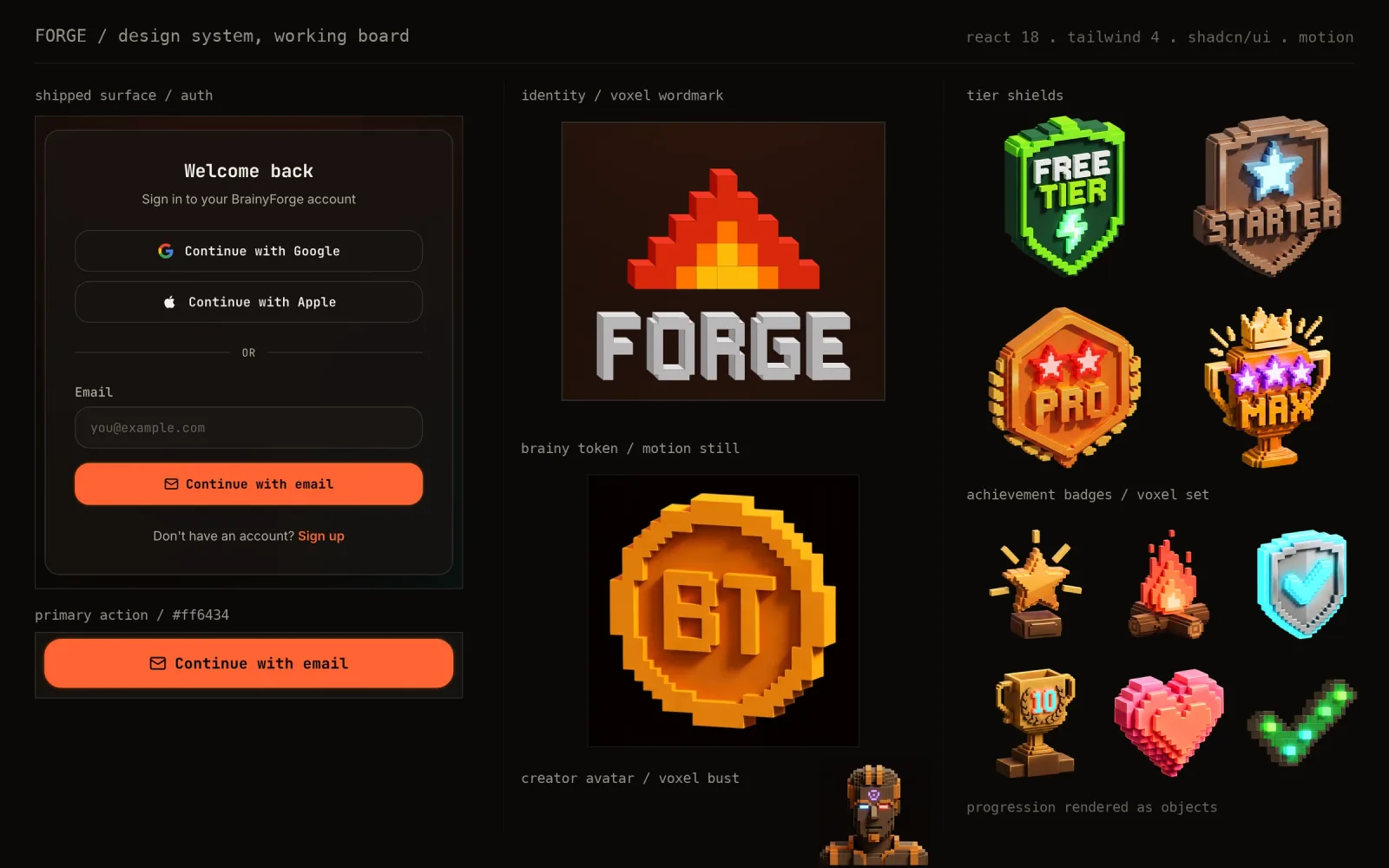
The interface is a component system: React 18 with Tailwind CSS 4 and shadcn/ui primitives on Radix, with motion handled through Motion. Design and engineering share one vocabulary from the first screen, which is what keeps the build fast and the product consistent after launch.
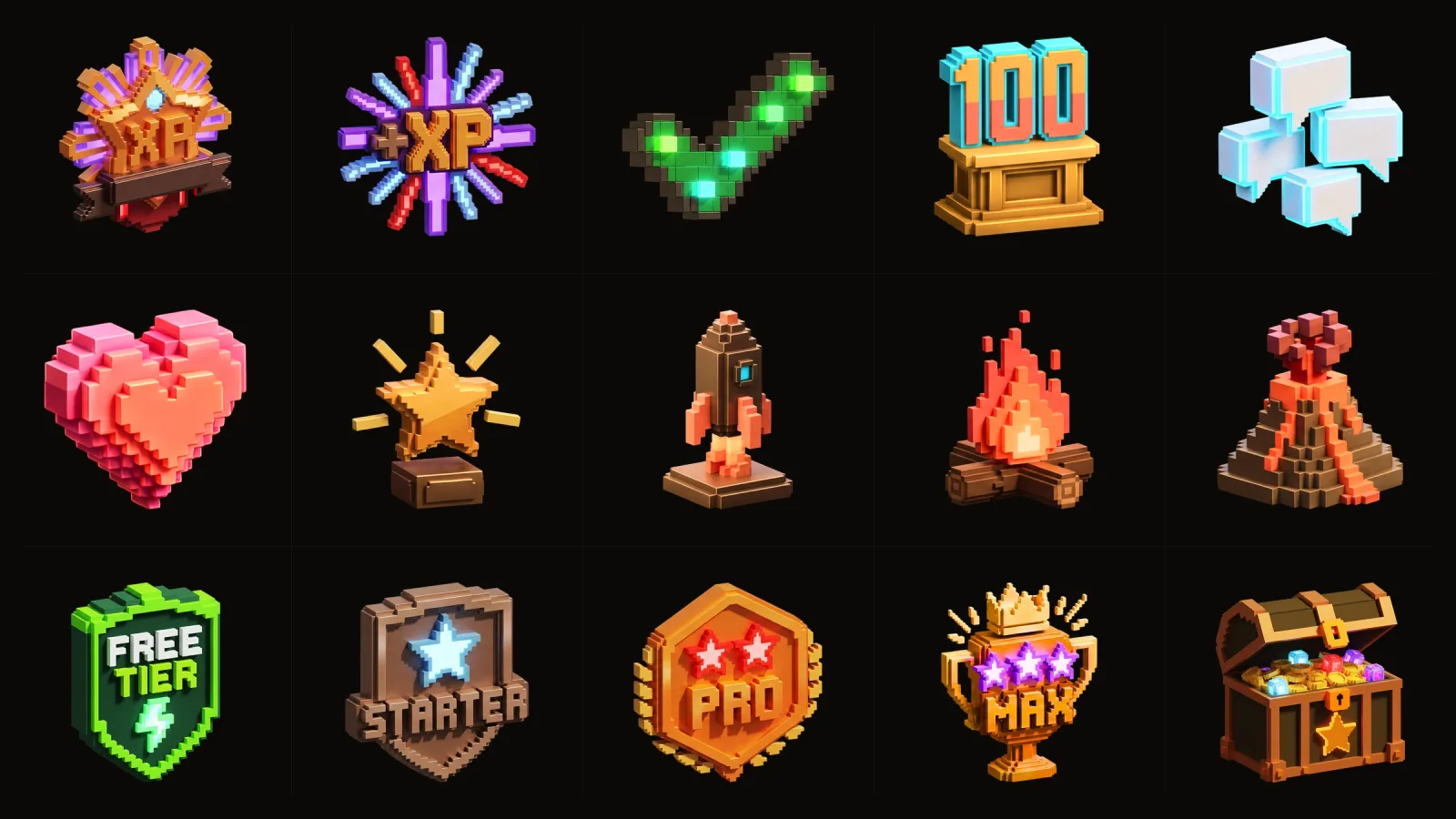
Forge carries a distinct gamified visual language, including a custom 3D voxel art direction for badges, tier shields, and reward assets, so progression feels like collecting real objects rather than incrementing counters.
03 / Systems design
An economy is a system, not a skin
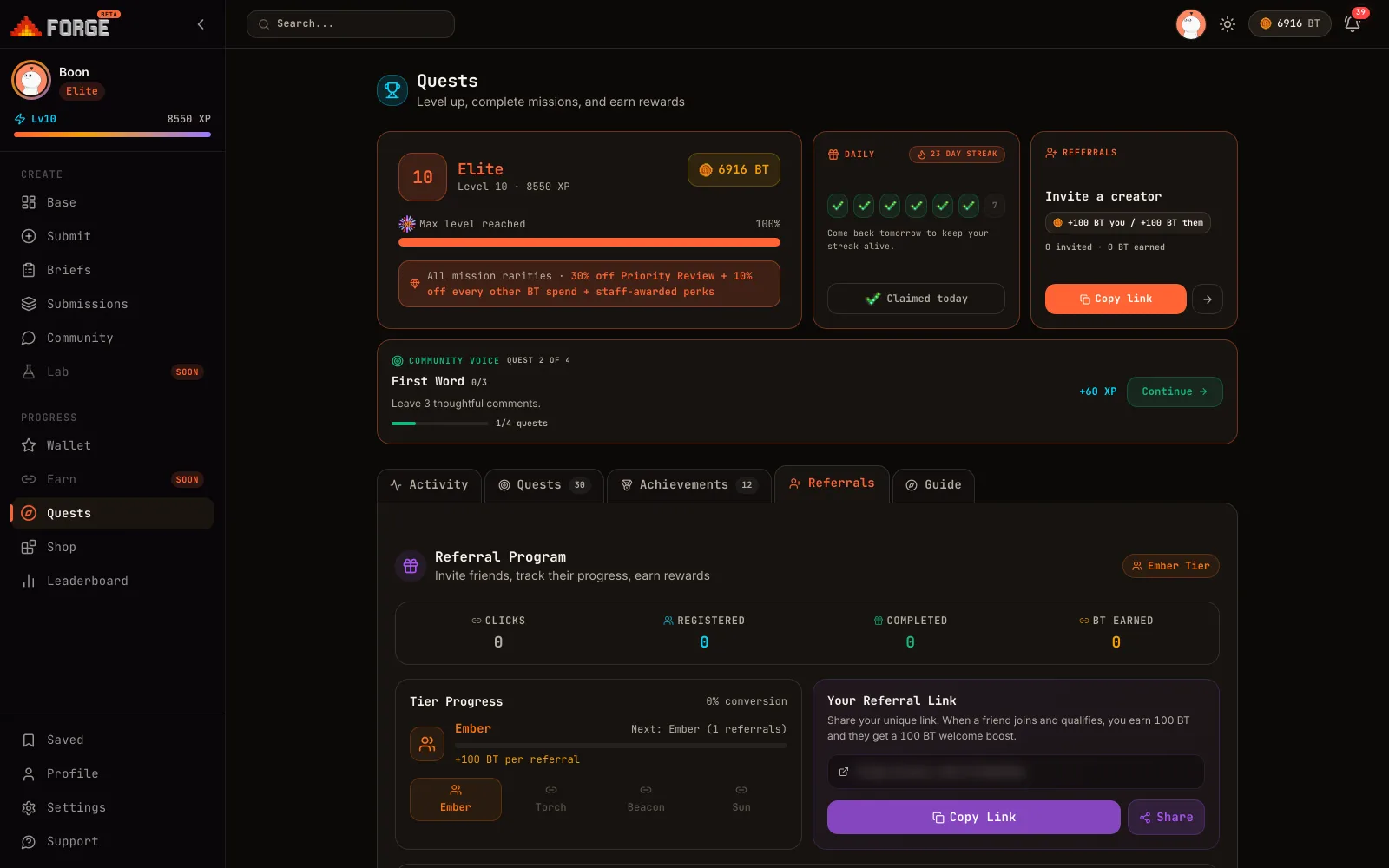
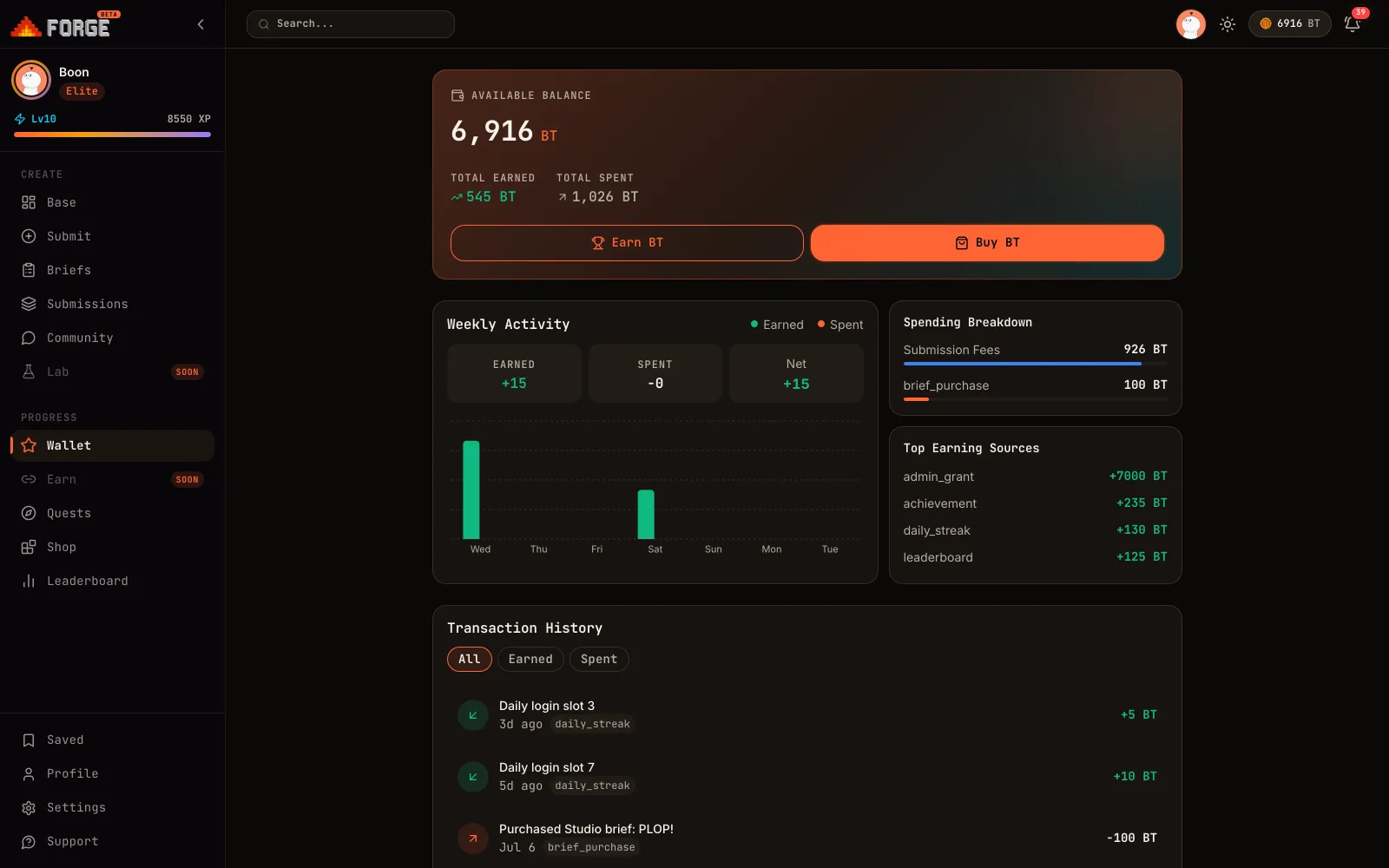
Forge runs on Brainy Tokens. Creators earn through approvals, quality scores, work that reaches the audience, weekly missions, achievements, leaderboard placements, referrals, and featured posts. They spend to submit work for publication and to prioritize review. Designing the economy meant balancing faucets against sinks, not skinning points onto a UI.
The first version also paid for attendance: a daily login schedule, streak milestones, and a freeze creators bought with real tokens to protect a number that measured nothing. On 31 July 2026 we deleted all of it and rewired the economy onto results. Publishing to the audience, which had paid zero, became the largest single award in the system.
Under it sits a proper ledger: every earn, spend, grant, refund, reversal, and expiry is an idempotency-keyed entry with a running balance, and pricing is server-authoritative. The economy is auditable end to end.
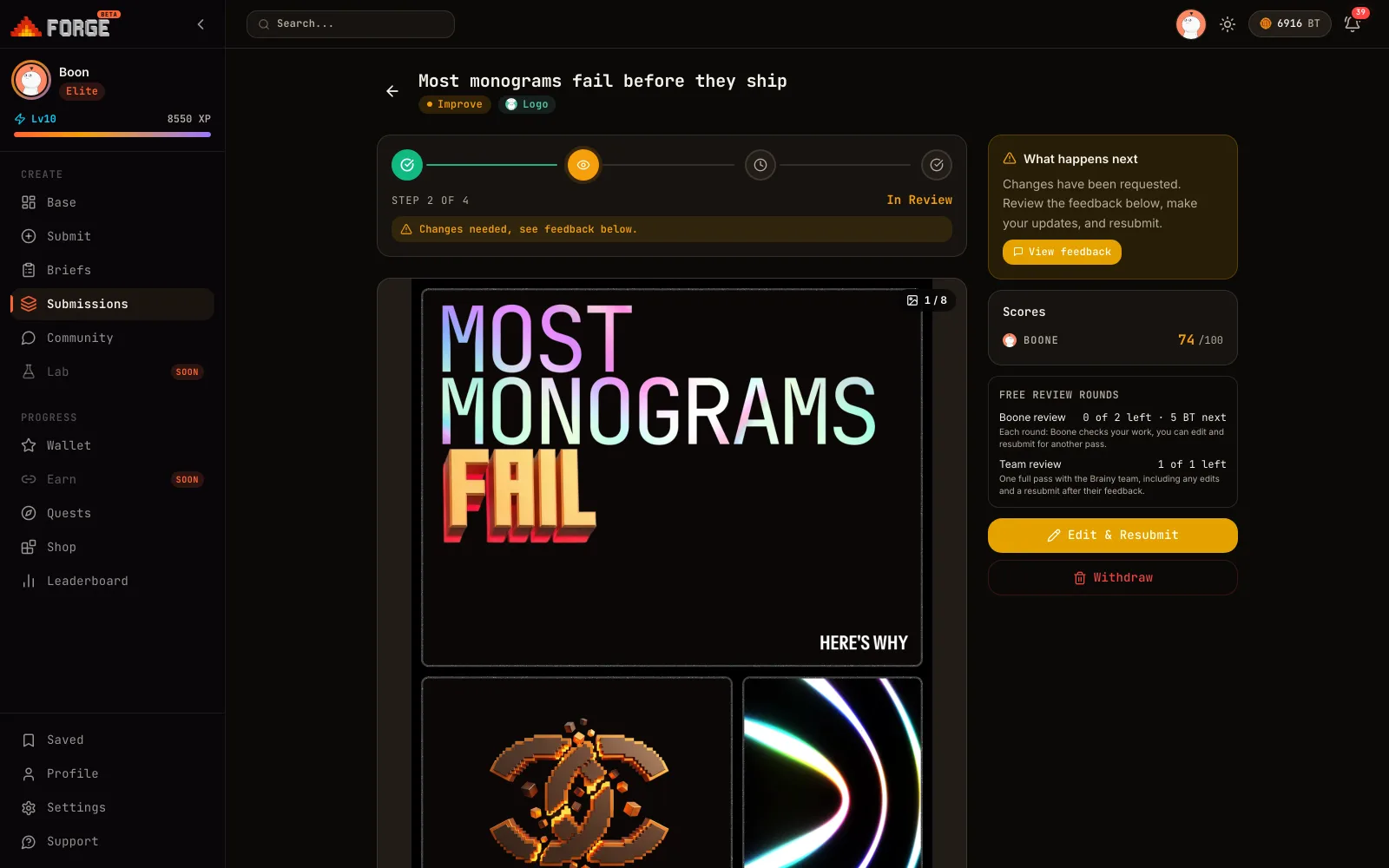
Quality control is a system too. Every submission moves through a defined pipeline: draft, submitted, AI check, improve, human review, scheduled, published. An AI reviewer evaluates each submission against structured rubrics and stores evidence for every judgment. Creators whose work is not ready get specific, actionable feedback and an improve loop instead of a flat rejection, and human editors review pre-screened work with the reasoning attached.
04 / Engineering
Built for real-time, billed for reliability
The backend is Convex, a real-time serverless database and function platform, with a schema of roughly 60 tables covering users, the token ledger, billing, submissions, AI evaluations, community, progression, growth, and notifications. Authentication is Clerk. Hosting is Vercel, with serverless functions for billing webhooks, image processing, Instagram integration, and push delivery.
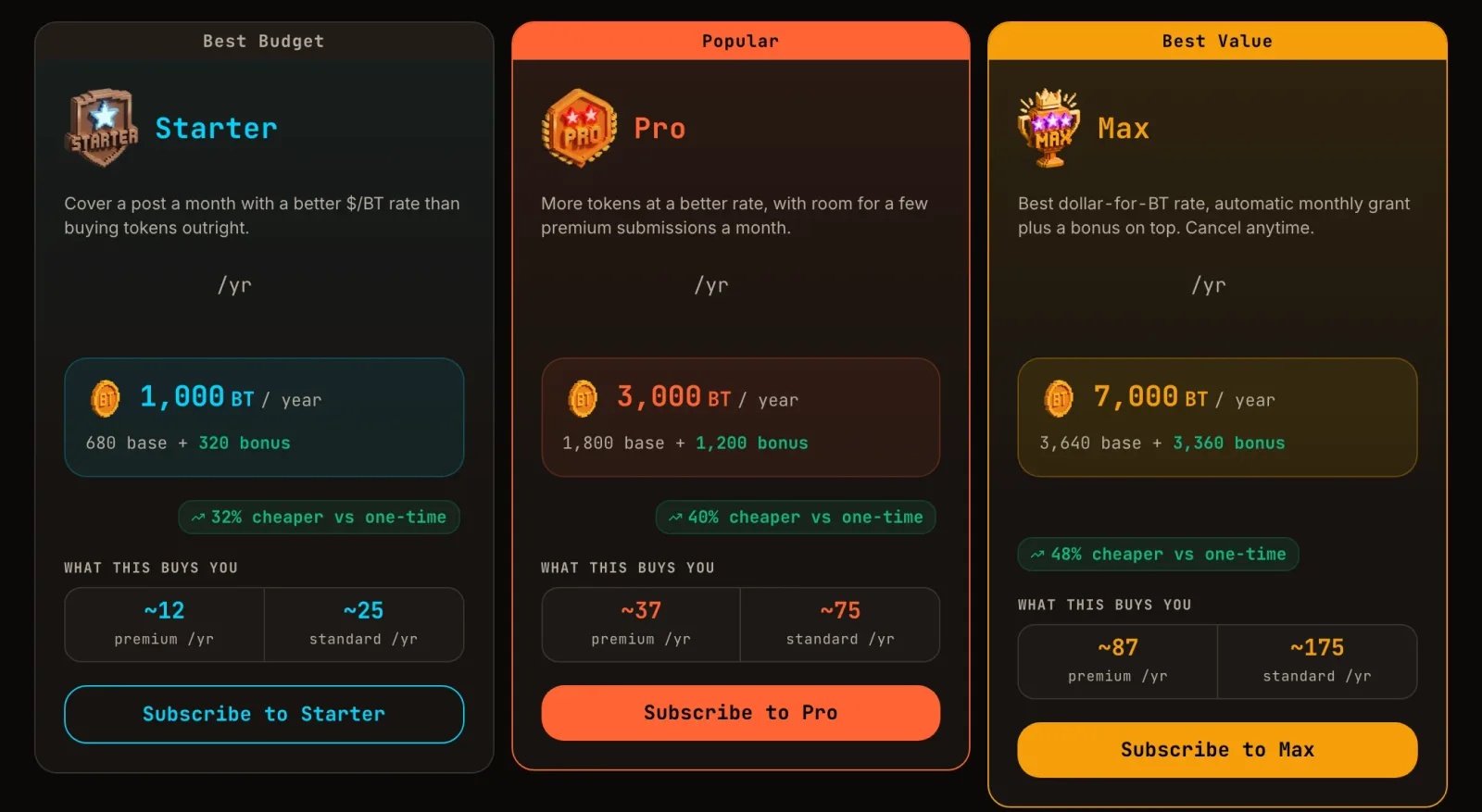
Billing runs on Stripe: recurring subscriptions across three tiers with monthly token allowances and tier entitlements enforced server-side, plus one-time token packs. Webhooks drive the ledger, and idempotency keys guarantee a payment event can never double-credit an account. Commerce, entitlements, and the token ledger reconcile against each other by design.
05 / Launch and operations
Measured from day one, operated after launch
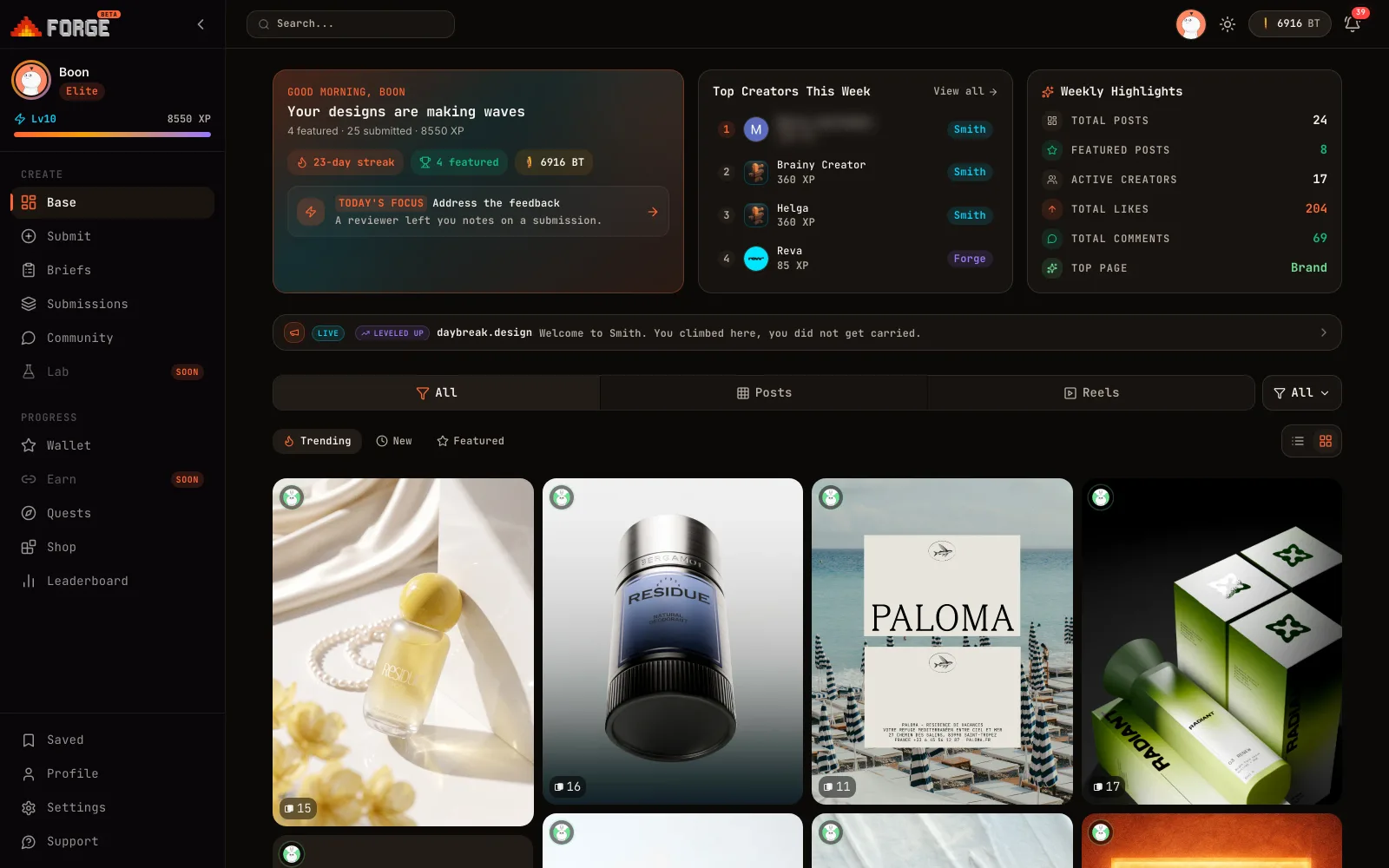
Instrumentation is part of the build, not an afterthought. Product analytics run on PostHog, backed by behavioral tables designed for measurement from day one: progression events, ledger entries, mission progress, contribution days, referral lifecycle stages, and submission timelines. Every number in this case study is queryable from the production database.
Launch is not the end of the engagement. The same team operates the product in production: scheduled jobs keep derived state fresh, leaderboards recompute every five minutes, and referral attribution runs across the full lifecycle from link opened through signed up, onboarded, activated, and rewarded.
Everything a SaaS product needs to ship and run
The full build from one team with no handoff gap: product strategy and system scoping, a shared design system, payments with idempotent crediting, an auditable token economy, AI review with humans in the loop, a real-time community layer, referral growth with full lifecycle attribution, analytics designed into the schema, and live operations after launch.
Tables in the production schema
Stages in the editorial pipeline
Subscription tiers, entitlements enforced server-side
Leaderboard refresh cycle
Small numbers, honestly measured. Live counts are from the production database as of July 10, 2026; funnel and economy figures come from production audits run July 3, 2026.
Creators on the platform
Active in the last 7 days
Active in the last 30 days
Completed onboarding
Created a first submission
Took a submission past draft
What the systems did
The product change moved the number
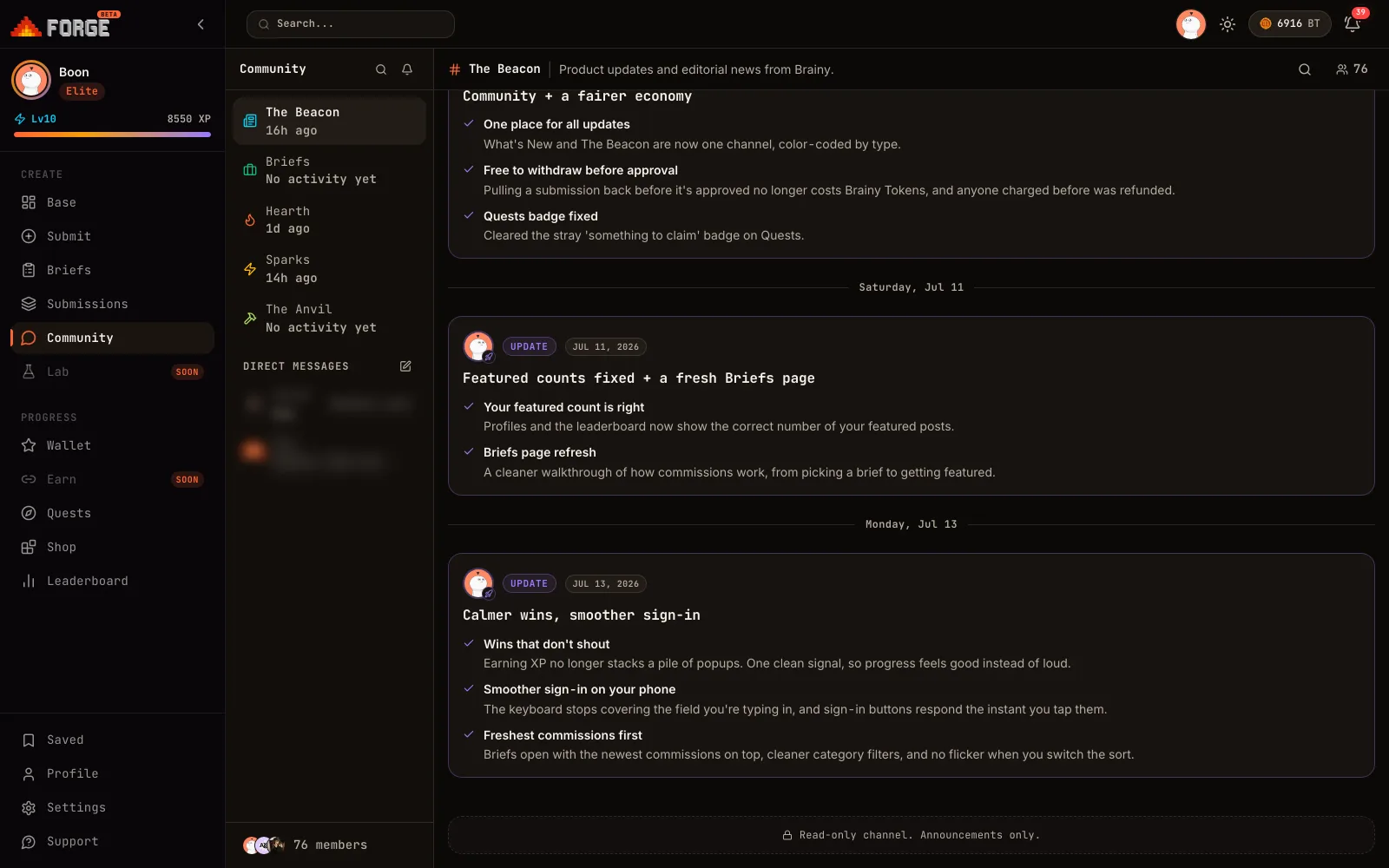
Weekly active creators held near 10 for the platform's first month, then reached 34 in the week the community layer shipped in early July 2026. That single week produced 24 signups, 44 percent of all signups to date at the time, in five days. Not a marketing push, a product change.
The referral system carried 46 percent of that week's new signups through creator invite links, and referral link visits converted to signups at 41 percent. The token economy has processed 9,312 tokens earned or granted and 3,575 tokens spent across 64 submission transactions by 29 creators, every movement recorded on the ledger. Creators have produced 93 submissions on the platform, 64 of them from community members, and 39 have been published.
The candid read: top-of-funnel activation is strong, and depth is the current product frontier. The instrumentation shows exactly where creators stall, which is what the current roadmap works on. We would rather show a real funnel with a known weak point and the data to fix it than a vanity chart.